When to plant fruit saplings: spring or autumn
We ship bare-root saplings in two windows — autumn 2026 and spring 2027. We cover how these planting times differ and which one fits your region and plot.
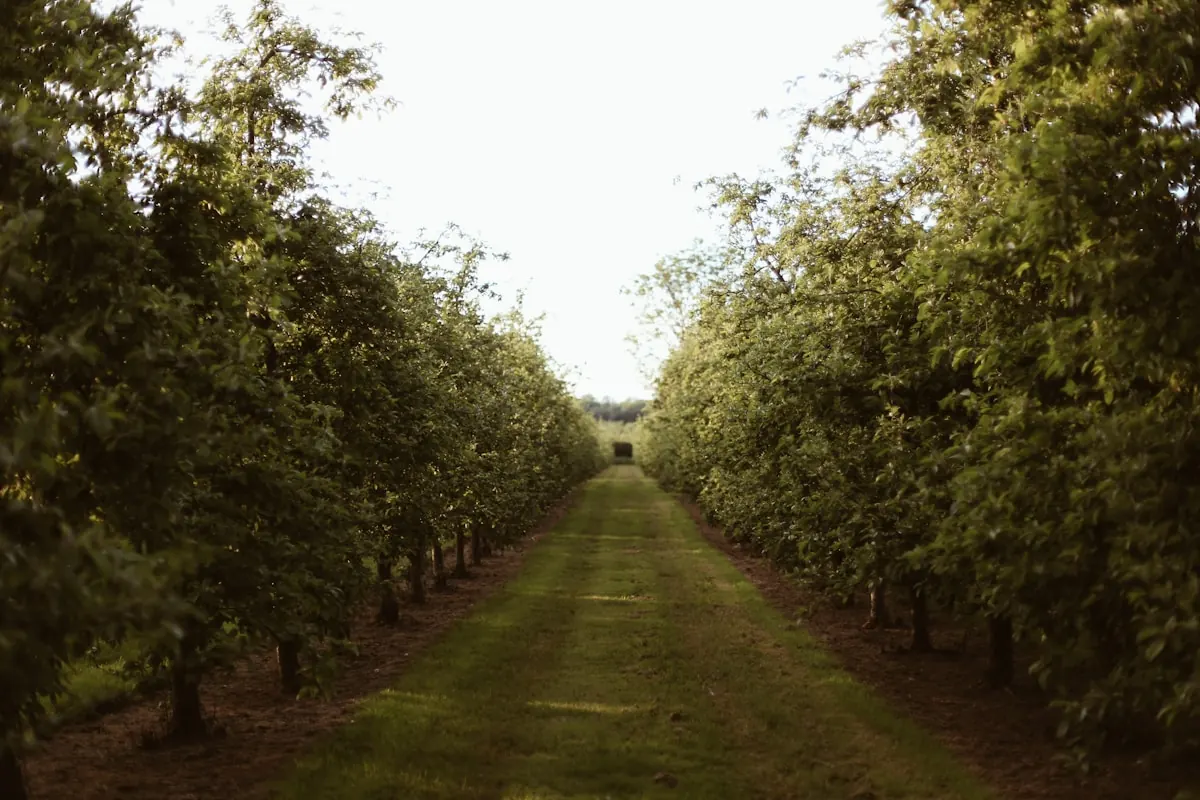
When a buyer takes a lot of saplings for a new orchard, the question of timing comes up almost at once: plant in autumn or in spring? There is no single "always do this" answer — the choice depends on the regional climate, the plot, and how ready you are to irrigate in the first season. We ship bare-root saplings (open root system) in two windows — autumn 2026 and spring 2027 — and this article helps you choose yours. Let us go through what each time gives, its risks, and why for southern Russia the recommendation is most often the same.
What the planting time depends on
A bare-root sapling establishes the more easily, the calmer it feels after transplanting. The ideal window is when the tree is dormant (no leaves, buds not breaking) while the soil is still or already workable for the roots. There are two such windows in a year: late autumn after leaf fall and early spring before bud break. In summer and at the height of the growing season bare-root saplings are almost never planted — roots without a soil ball cannot keep up with the foliage demand for water.
The choice between these two windows is set by three factors: the mildness of the winter (is there a risk of a fresh planting freezing out), the water supply in summer (will you be able to irrigate the young orchard), and logistics — when it is convenient for you to receive and plant the lot. Next we cover each window separately.
Autumn planting: pros and risks
In autumn saplings are planted after leaf fall, when the tree has gone dormant but the soil still holds warmth. This is the key advantage: warm ground gives the roots several weeks to heal the lifting damage and anchor while the top is asleep. By spring such a tree wakes up already established and starts growing at once — without the pause for establishment that agronomists call "transplant stress".
The second plus of autumn is moisture. Autumn and winter precipitation naturally wets the tree strip, and the first season does not demand the strict irrigation schedule that a spring planting needs. For southern Russia, where summers are dry and hot, this is a weighty argument: the tree enters its first summer already with a developed root system.
The main risk of autumn planting is an early hard frost on a tree that has not yet anchored. If the cold strikes before the roots establish, the sapling can suffer. So autumn planting is insured: you hill up the sapling and mulch the tree strip (humus, peat, straw) — this holds warmth at the roots and smooths temperature swings. In a mild southern winter this risk is small; in zones with a harsh snowless winter it is, on the contrary, decisive.
Spring planting: pros and risks
In spring saplings are planted before bud break, as soon as the soil has thawed and become workable. The main advantage of spring is reliability in cold regions: the tree has a whole warm season ahead, and there is simply no risk of a fresh planting freezing out over winter. Where the winter is harsh, or snowless with hard frosts, spring planting is noticeably safer than autumn.
The price for this reliability is summer heat and drought that arrive before the tree has grown its roots. A spring sapling meets its first summer with a weak, not yet expanded root system, and only disciplined irrigation keeps it alive. To miss the schedule in July or August in the south is to lose part of the planting. So spring planting requires that water on the plot be guaranteed.
The spring planting window is short: it is important to be in time before bud break. Delay, and the tree starts unfolding its foliage before it has anchored its roots, which sharply lowers establishment. So in spring the lot is planned ahead and planted at once, as soon as the soil is ready.
Autumn or spring: a comparison
If we bring both times into a table, the difference is clear at once:
| Criterion | Autumn planting | Spring planting |
|---|---|---|
| When (timing) | After leaf fall, before settled frosts | After the soil thaws, before bud break |
| Establishment | High: roots anchor before spring, growth with no pause | Good with irrigation, but with transplant stress in summer |
| Main risk | An early hard frost on an unanchored tree | Summer heat and drought on weak roots |
| Irrigation in season 1 | Moderate — autumn and winter rains help | Mandatory and regular through the whole first season |
| Which regions it suits | Warm south with a mild winter (Stavropol Krai) | Harsh winter, snowless cold, hard frosts |
The rule is simple: a warm south with a mild winter — autumn is usually preferable; a harsh winter or snowless cold with hard frosts — spring is more reliable. Everything else (soil preparation, pruning, watering after planting) matters equally in both windows.
Reserve a lot for autumn 2026 or spring 2027?
We will match cultivars and rootstocks to your region and planting time and reserve a lot in the right window — autumn 2026 or spring 2027.
Preparation for planting in either window
Timing is timing, but establishment is largely decided by preparation. A few things matter equally in autumn and in spring:
- Prepare the hole and the soil in advance — fill the planting hole, let the earth settle, so the roots go into a ready horizon.
- Do not let the bare roots dry out before planting — an open root system fears wind and sun; keep the roots in a moist medium, not in the air.
- Plant right after receiving the lot — the less the sapling waits, the higher the establishment.
- After planting, water and, if needed, prune the canopy — watering presses the soil around the roots, and pruning balances the top against the cut roots.
If the lot has already arrived but you cannot yet plant it in its permanent place (frozen or waterlogged soil, no time), the saplings are not left in the air — they are heeled in. Heeling in is a temporary planting at an angle into moist ground, covering the roots and the lower part of the stem; in this state a bare-root sapling calmly waits several days or even weeks until the real planting.
How to choose the time for your orchard
If your plot is in southern Russia — including Stavropol Krai — and your winter is mild, by default you should look at autumn: the tree will establish before the cold and bear the dry summer more easily. If your winter is harsh, low on snow and with hard frosts, spring is more reliable — even at the cost of disciplined irrigation in the first season.
Beyond timing comes the question of tree count and the planting scheme — we covered it separately in how many saplings you need per hectare. The sapling catalogue helps you pick specific items, and how we lift, store and hand over a lot for the right window is described in how we prepare and hand over a lot.
The essentials, in brief.
When is it better to plant apple trees — in spring or autumn?
It depends on the climate. In southern Russia with a mild winter apple trees are usually better planted in autumn: the tree establishes before the cold and starts growing in spring with no pause. In regions with a harsh snowless winter spring planting is more reliable — there is no risk of a fresh planting freezing out.Can bare-root saplings be planted in autumn in the south?
Yes, in the south autumn planting of bare-root saplings is the preferred option. A mild winter lowers the risk of early frosts, and soil that stays warm after leaf fall lets the roots establish. As insurance the sapling is hilled up and the tree strip is mulched.What is the timing for autumn planting of fruit saplings?
In autumn you plant after leaf fall, when the tree has gone dormant, but before settled frosts — so the roots have several weeks of warm soil to establish. The exact window shifts by year and region, so you go by the state of the tree and the cold forecast rather than a calendar date.What should I do if the saplings arrive but I cannot plant yet?
Bare-root saplings must not be left with their roots in the air — they are heeled in. Heeling in is a temporary planting at an angle into moist ground, covering the roots and the lower part of the stem. In this state the saplings calmly wait several days or weeks until permanent planting.Is irrigation needed for spring planting?
Yes, and it is the main condition. A spring sapling meets the summer heat with a weak root system, so regular irrigation in the first season is mandatory. Without disciplined watering in the south part of a spring planting can be lost in July and August.How is autumn planting better than spring?
In autumn the tree establishes before winter and starts growing in spring with no transplant stress, and the first season is easier thanks to autumn and winter moisture. This is especially valuable in the dry south. The one downside is the risk of an early frost, which a mild winter, hilling up and mulching remove.
Related material
- 01How many saplings you need per hectare: intensive orchard planting schemesThe number of saplings per hectare is set by the planting scheme, and the scheme is set by the rootstock. We cover the formula, give a density table and show how much to order in reserve.Read article
- 02Documents for saplings: what to check when buying a lotA lot of saplings without documents is a blind purchase: the cultivar, rootstock and health status are all unknown. We cover which papers to request from the seller and what each one proves.Read article
- 03How to buy saplings wholesale direct from the nurseryA step-by-step guide to ordering saplings wholesale direct from the nursery — from stock list and booking to self-pickup with paperwork — and why a direct supply beats a reseller.Read article
Need saplings for your project?
We will match cultivars and rootstocks to your orchard scheme, price a lot from 6,000 units, and set a pickup window — fall 2026 or spring 2027.